
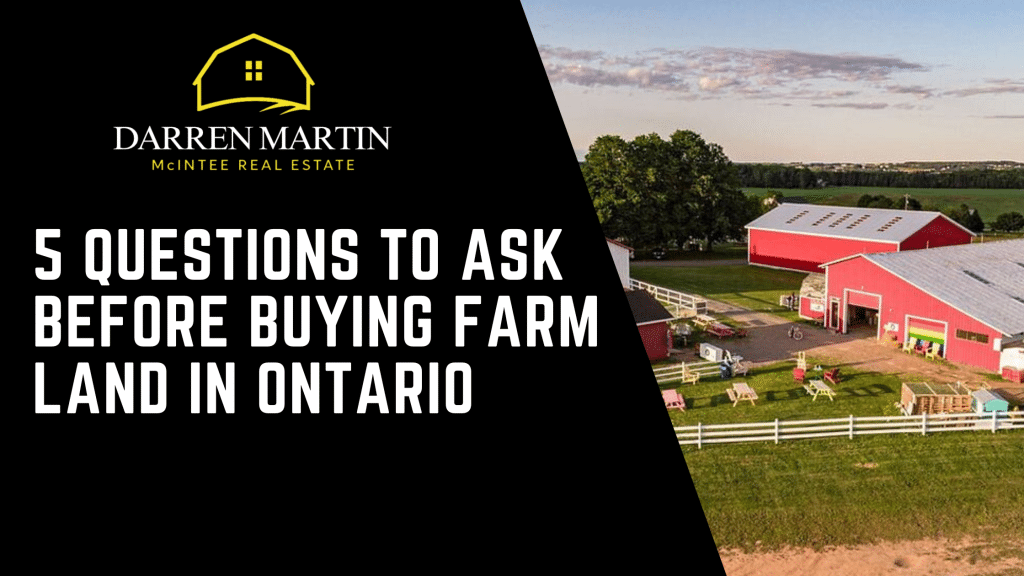
When thinking about buying farmland in Ontario, it’s important to ask yourself a few key questions.
First, is this property the right fit for your farming needs? Make sure it aligns with your business goals and plans for investment. Next, how will you finance the purchase?
Understand your options, paying cash may limit funds for other expenses. Also, check the zoning regulations; not all land can be used as you wish.
Assess soil quality and water availability too; these are essential for successful farming. Lastly, look into any legal issues or obligations related to the land to avoid surprises later on.
Before buying farmland in Ontario, consider these key questions:
1. Is the purchase right for your current farming operations and financial goals?
2. What are your financing options, and how will they affect your cash flow?
3. Are you aware of local zoning regulations that could impact your plans for the land?
4. What is the soil quality and water availability critical for crop success?
5. Have you checked for any legal issues or obligations related to the land? Additionally, think about tax implications, future succession plans, and consult with professionals to smooth the process.
Frequently Asked Questions
What are the top things I should know about the land’s soil quality?
Knowing the soil quality is key, as it affects what crops can grow, how well they grow, and even your land’s future value. Find out if the soil is fertile and if it has the right nutrients for your agricultural plans.
Are there any local zoning laws that could impact how I use the land?
Yes, local zoning laws can dictate what you can do with the land. It’s important to check if there are any restrictions on activities such as farming, building, or even selling the land later.
What is the water supply situation on the land?
A reliable water supply is crucial for farming. Research if there are existing water sources, access to irrigation, or any issues with water rights in the area.
Are there any nearby environmental regulations I should be aware of?
Yes, environmental regulations can affect how you manage your land. Check if there are protected areas nearby, restrictions on pesticide use, or rules about biodiversity that you may need to follow.
What are the community and infrastructure resources available around the property?
Understanding the community resources such as roads, markets, schools, and healthcare facilities can help you evaluate the land’s livability and connectivity for your farming operations.