
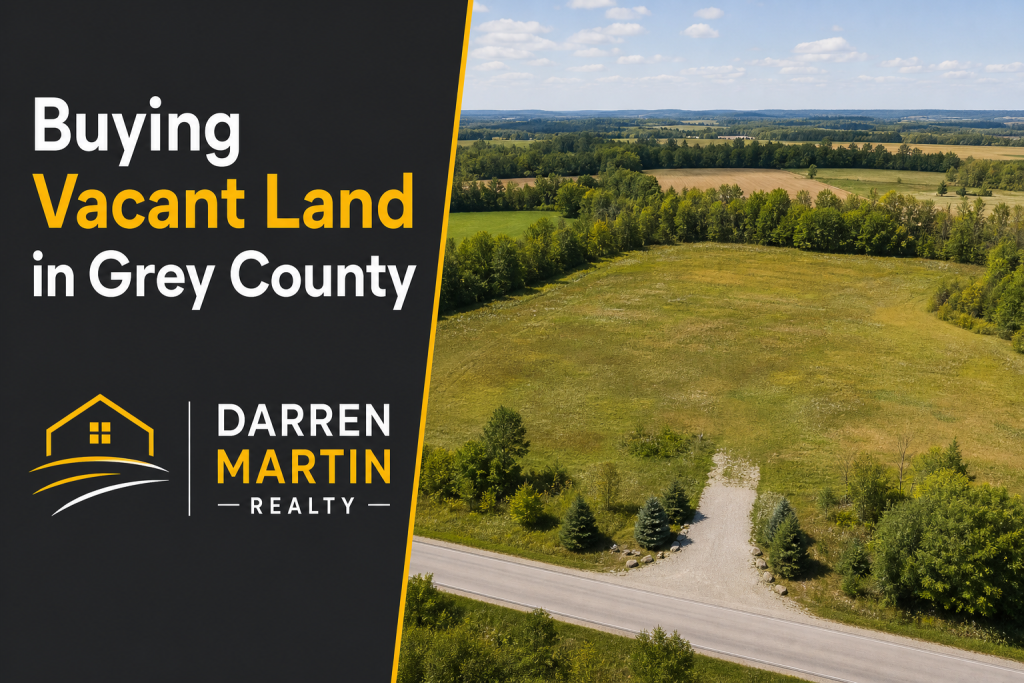
Buying vacant land in Grey County can be an exciting way to build a home, create a country retreat or secure property for a future rural project. It can also involve more due diligence than buying an existing house. A vacant lot may look ideal at first glance, but zoning, access, servicing and site conditions can significantly affect what you can do with it.
Before you make an offer, use this checklist to understand the land and identify questions that should be answered during your due diligence period.
1. Confirm what the land is zoned for
Never assume that a vacant lot can be used for any purpose simply because it has road frontage or appears suitable for building. The municipality’s zoning rules may determine whether the property can support a full-time home, seasonal residence, farm use, accessory building or another type of development.
Ask the municipality to confirm the current zoning and permitted uses. You should also ask whether there are minimum requirements for lot area, frontage, setbacks, building size and accessory structures. If your plans depend on a severance, rezoning or minor variance, understand that approval is not guaranteed.
Buyers considering farmland should also review our guide to questions to ask before buying farm land in Ontario. Agricultural properties can involve additional land-use considerations beyond a standard residential lot.
2. Find out whether the lot is actually buildable
A property can be legally described as a building lot without being straightforward to develop. Before moving forward, investigate whether the proposed building area meets local requirements and whether there are constraints such as wetlands, steep slopes, waterways, woodlands, natural heritage features or conservation restrictions.
For rural properties, the usable building area may be much smaller than the total lot size suggests. An environmental review, survey or preliminary site assessment may be worthwhile before you commit to the purchase.
3. Check legal and physical road access
Road access is one of the most important practical issues when buying vacant land. Confirm whether the property fronts directly onto a municipally maintained road or relies on a registered right-of-way or shared driveway.
If access is shared, review the easement and confirm who is responsible for maintenance, snow removal, repairs and improvements. You should also consider whether emergency vehicles, construction equipment and delivery trucks can safely reach the proposed building site.
A survey can help clarify the location of property boundaries, frontage, easements and potential encroachments. If the listing information and the physical appearance of the land do not seem to match, ask for clarification before making assumptions.
4. Investigate water, septic and other services
Many rural properties in Grey County are not connected to municipal water or sewer systems. That means you may need a private well and septic system, and the suitability of the land for those systems should be confirmed before you rely on a building plan.
Ask whether the property has:
- Hydro or other electrical service available at the lot line
- An existing well, drilled well record or water source
- A completed septic assessment or approved septic plan
- Natural gas, internet or other services nearby
- Any estimated connection, installation or construction costs
The presence of nearby services does not necessarily mean they are already connected or inexpensive to bring to the building site. A rural property specialist can help you organize the right questions for the seller, municipality and qualified contractors.
5. Understand the land’s physical characteristics
Walk the property in different conditions if possible. A sunny summer showing may not reveal drainage concerns, spring runoff, wet areas or difficult winter access.
Pay attention to the slope, soil, tree cover, exposed rock, low-lying areas and natural drainage patterns. Consider where a driveway, house, septic bed, well and outbuildings could realistically be located. If you are planning to farm, garden or keep animals, evaluate the workable acreage rather than relying only on the total lot size.
It is also worth asking whether the land is subject to flooding, erosion, conservation regulations or other restrictions. These issues do not automatically make a property unsuitable, but they can affect design, cost and timelines.
6. Review taxes, carrying costs and future expenses
Vacant land may have fewer immediate maintenance responsibilities than an existing home, but it still comes with ongoing costs. Review the current property taxes and ask whether the tax classification could change after construction or a change in use.
Budget for expenses such as:
- Surveying and legal review
- Driveway construction and culverts
- Tree clearing, grading and excavation
- Well and septic installation
- Hydro or telecommunications connections
- Building permits, professional plans and inspections
- Property insurance and regular land maintenance
Getting early estimates can help you compare the total cost of developing the lot with the cost of buying an existing rural home.
7. Use conditions in your offer to protect your plans
Your offer should reflect the questions that need to be answered. Depending on the property and your goals, conditions may relate to financing, a satisfactory survey, zoning confirmation, septic suitability, environmental review, access or other professional investigations.
The right conditions depend on the specific transaction. Discuss your plans with your REALTOR®, lawyer, lender and any relevant specialists before signing an agreement. A clear due diligence plan can help you avoid purchasing land that cannot support your intended use.
8. Work with someone familiar with Grey County land
Vacant land requires a different approach from a conventional home purchase. Local knowledge can help you identify practical questions about rural roads, communities, farms, country properties and the municipal process.
Darren Martin helps buyers explore homes, farms, country properties and land across Grey, Bruce, Wellington and surrounding communities. You can search current property listings, browse farms for sale or learn more about Darren’s real estate services.
Questions to ask before buying vacant land
- What is the current zoning and what uses are permitted?
- Is the property confirmed as a building lot?
- Does it have direct legal access from a maintained road?
- Are hydro, internet, water and septic solutions available?
- Are there wetlands, conservation constraints or flood risks?
- What surveys, studies or approvals should be completed?
- What will it cost to prepare the land for construction?
Plan your Grey County land purchase carefully
The best vacant-land purchase is based on more than acreage, scenery or an attractive asking price. By confirming zoning, access, servicing, site conditions and development costs early, you can make a more informed decision and avoid expensive surprises.
If you are considering vacant land in Grey County, contact Darren Martin to discuss your plans and start narrowing down the right property.