
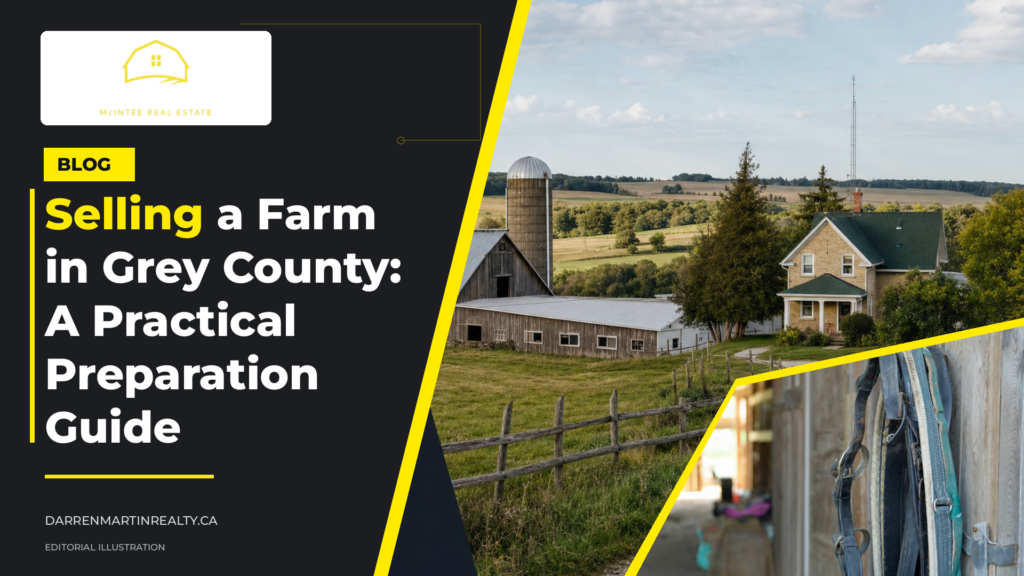
Before listing a farm in Grey County, decide what is included, gather the property records, verify land-use information and identify any issues that could affect access, marketing or negotiations. A farm sale may involve workable acreage, bush, wetlands, residences, barns, shops, fencing, wells, drainage, leases and movable assets. The earlier these details are organized, the easier it is to describe the property accurately.
Start with a complete property inventory
Write down every major component of the property and farm operation. Separate real estate from items that may be removed, sold separately or negotiated as part of the transaction.
- Workable, pasture, bush and wetland areas
- The farmhouse, secondary residences and seasonal buildings
- Barns, livestock facilities, shops, drive sheds and greenhouses
- Fencing, gates, laneways, ponds, wells and drainage infrastructure
- Grain bins, silos, manure storage and other fixed improvements
- Leased equipment, livestock, crops, feed and movable personal property
Where acreage, measurements or quantities are approximate, label them that way. Registered information, surveys and other available records should take priority over memory or old marketing material.
Gather documents before the listing is prepared
Farm buyers usually need more information than a conventional home buyer. Assemble what you have, then make a note of what is missing rather than delaying the conversation until the file is perfect.
- Property tax bills and assessment information
- Utility, heating and operating details for the residence and major buildings
- Well records, water testing results and septic information, where available
- Building permits, surveys, site plans and renovation records
- Tile drainage maps, soil information and crop history, if available
- Farm leases, rental agreements and arrangements with neighbouring landowners
- Information about shared driveways, road access, hydro lines or easements
- Environmental, conservation or stewardship records connected with the property
This preparation helps identify questions that may need a lawyer, accountant, surveyor, environmental professional or municipal planning staff.
Describe the land by use, not just total acreage
Total acreage is only one part of a farm’s value. Prepare a straightforward description of how the property is currently used, including approximate acreage by use, crops or livestock, buildings, access and known limitations.
Workable acreage, drainage, soil capability, production history and carrying capacity should not be presented as guaranteed facts unless they are supported by appropriate records. A buyer may value a woodlot, wetland, pond, trails or privacy, but those features should be described separately from productive agricultural land.
This distinction helps the listing speak to different audiences without overstating what the property can support.
Verify zoning and development assumptions
Do not market a possible severance, building site, additional dwelling or commercial use as an approval. Grey County explains that zoning by-laws are the responsibility of the local municipality, while planning authority depends on the type of application. The County’s land-use planning FAQ is a useful starting point, but property-specific answers must come from the municipality and qualified professionals.
Before describing a future opportunity, ask about:
- Current zoning and official plan designation
- Minimum lot size and agricultural land-use policies
- Existing severances, previous applications and retained parcels
- Building locations, setbacks, entrances and servicing
- Natural heritage, hazard, floodplain or Niagara Escarpment considerations
- Whether the proposed use requires a planning application or other approval
Use wording such as “subject to buyer verification” only where it accurately reflects an unconfirmed possibility. It should not replace actual planning research.
Review farm tax and business matters with your advisors
Ontario’s Farm Property Class Tax Rate Program provides reduced property-tax treatment for eligible farmland. Ontario identifies requirements that include MPAC assessment as farmland, use in a farm business, a valid Farm Business Registration number and qualifying ownership. Eligibility can change when ownership or the farm operation changes.
If the sale involves a farm corporation, partnership, quota, livestock, equipment, leased land, family succession or other business assets, speak with your accountant and lawyer before deciding how the transaction will be structured. The real estate listing should not promise a tax result or replace professional advice.
Assess buildings and improvements before photography
Farm buyers look closely at function, access and condition. Focus first on work that improves safety and makes the property easier to understand.
- Remove clutter from the farmhouse, shop and principal agricultural buildings.
- Repair obvious trip hazards, broken lights, damaged gates and unsafe stairs.
- Organize equipment so building size and condition can be seen.
- Trim vegetation around entrances, foundations and key structures.
- Document the use of buildings that may not be self-explanatory.
- Address practical drainage, leak or access concerns where appropriate.
Do not conceal defects or undertake expensive upgrades without first discussing their likely effect on the sale. Some work may improve presentation; other items are better disclosed and reflected in the pricing strategy.
Plan showings around the farm operation
A farm showing may involve livestock, active machinery, tenants, employees, dogs, locked buildings, private lanes or areas that cannot be entered without supervision. Prepare clear instructions before the property goes live.
- Identify buildings or areas requiring special access.
- List livestock, pets, machinery and biosecurity considerations.
- Explain seasonal road and laneway conditions.
- Point out hazards, water features and restricted areas.
- Set the amount of notice needed for showings.
- Explain whether the farm operation will continue during the listing.
Good showing instructions reduce disruption and help serious buyers evaluate the property safely and efficiently.
Check environmental information where it is relevant
If the property has a history involving fuel storage, waste handling, spills, unusual fill, industrial activity or concerns about soil or water, raise the issue early with qualified professionals. Ontario’s Environmental Property Information Program can help identify whether certain government records exist. It is not mandatory, and it does not replace legal, environmental or technical advice.
Build marketing around the likely buyer
A useful farm listing lets a buyer understand the land base, buildings, residence, access and current configuration quickly. Depending on the property, marketing may include professional photography, aerial imagery, floor plans, building measurements and a detailed feature summary.
Darren Martin Realty provides services for farms, agricultural properties and rural land throughout West Grey, Grey County and surrounding communities. The business site identifies Darren Martin as a REALTOR® and first-generation farmer, with practical agricultural experience relevant to features such as workable acreage, barns, outbuildings, fencing, access, water, drainage and rural infrastructure. Learn more about farms and agricultural real estate services.
Consider which buyers are most likely to be a fit:
- An operating farmer looking for additional land or a complete farm
- A livestock, equestrian or specialty agricultural buyer
- A hobby farmer or rural lifestyle buyer
- A buyer focused on a country home, acreage or recreational setting
- An investor or entrepreneur assessing a permitted agricultural opportunity
The property can appeal to more than one group, but the marketing should remain precise about its current use and confirmed features.
Price the whole property, not just the acreage
Price per acre can be a reference point, but it does not capture the differences between farms. Compare the property as a combination of land, buildings, residential value, access, services and improvements.
- Comparable farm and rural property sales
- The quantity and quality of workable acreage
- Building condition, function and replacement considerations
- Residence quality and any secondary accommodation
- Current leases or operating arrangements
- Water, drainage, fencing, access and other established infrastructure
- The market exposure needed to reach suitable buyers
Ask for a property-specific market evaluation rather than relying on a county-wide average, a single nearby listing or an unsupported price-per-acre assumption. You can also review current farm listings to see the range of property types and features being presented.
Use a final pre-listing checklist
Before publication, compare the listing description, feature sheet, photographs and supporting documents. Confirm:
- Legal description and municipal address
- Approximate and registered acreage information
- Building sizes, ages and uses
- Water, septic, heating and access details
- Current leases and possession expectations
- Included and excluded items
- Zoning and planning language that has been verified or properly qualified
- Showing instructions and safety notes
- Preferred timing, possession date and communication process
What to do next
- Make the complete land, building and personal-property inventory.
- Collect tax, access, lease, survey, well, septic and building records.
- List every zoning or development assumption that needs confirmation.
- Ask your lawyer and accountant about business assets, ownership and tax matters.
- Request a property-specific market discussion before spending on improvements.
If you are considering selling a farm, agricultural property or rural land in Grey County, contact Darren Martin Realty to discuss what needs to be clarified before listing.